This family is comprised of the Nuthatches, genus Sitta, and the Wallcreepers, genus Tichodroma. They breed in cavitites, either tree cavities or rock cavities. The Wallcreeper is an insectivore, which feeds on invertebrates, primarily insects and spiders. Invertebrates are also a major part of the diet for nuthatches, especially during the breeding season, but most species also eat seeds at least during the winter, when invertebrates are less readily available. The nuthatches all store food, usually seeds, which may be pushed into crevices or into the ground, hidden under small bark flakes.
Genus Sitta
Nuthatches usually head down the tree; Creepers usually head up the tree.
Nuthatch,_Algerian Sitta ledanti Found: Algeria
The male Algerian Nuthatch has blue-gray upperparts; black crown, eye-line; white supercilium. Female similar with gray crown, eye-line.
Image by: 1) tododu74 2) Werner_Suter


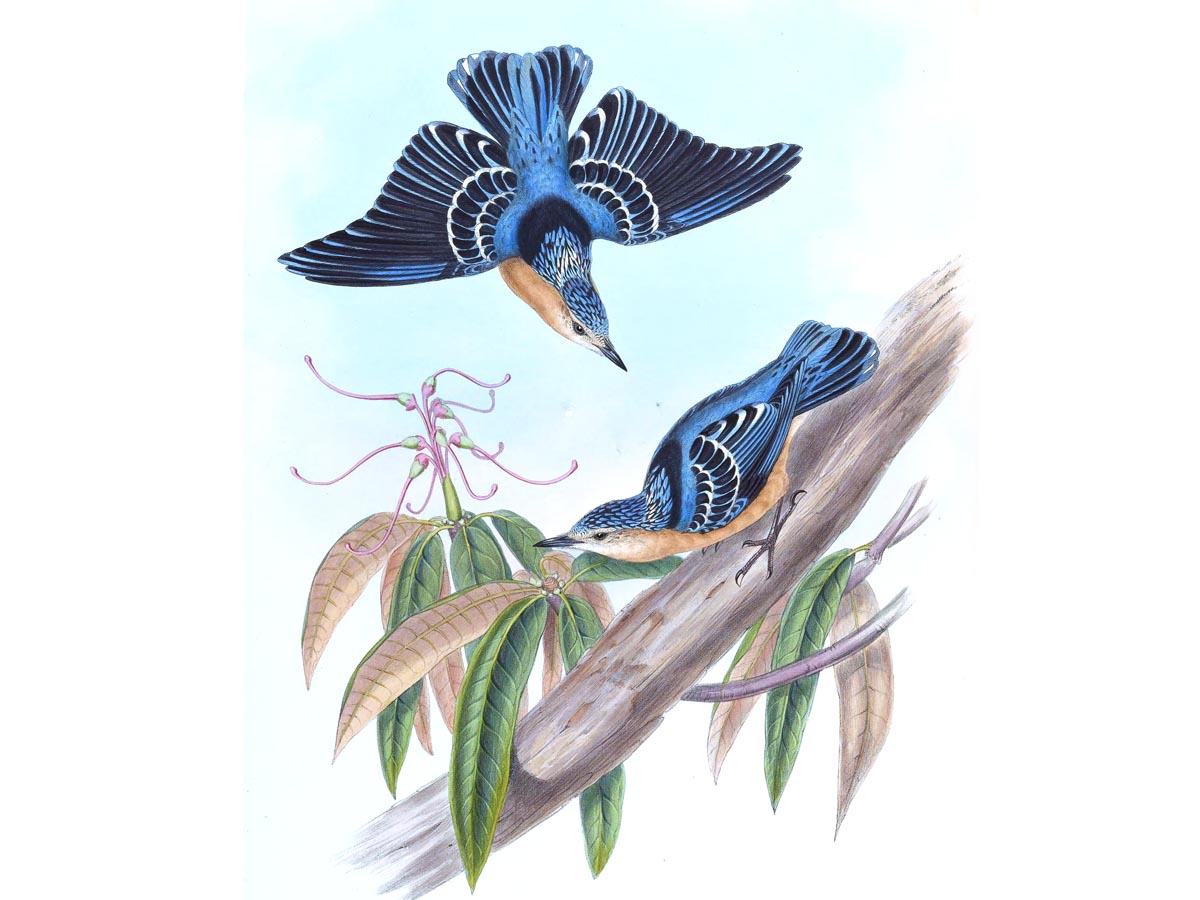
Nuthatch,_Beautiful Sitta formosa Found: China, India, southeast Asia
The Beautiful Nuthatch has black and blue upperparts streaked with white; pale blue head; orange underparts.
Image by: 1) John_Gould 2) Balaji_Venkatesh_Sivaramakrishnan 

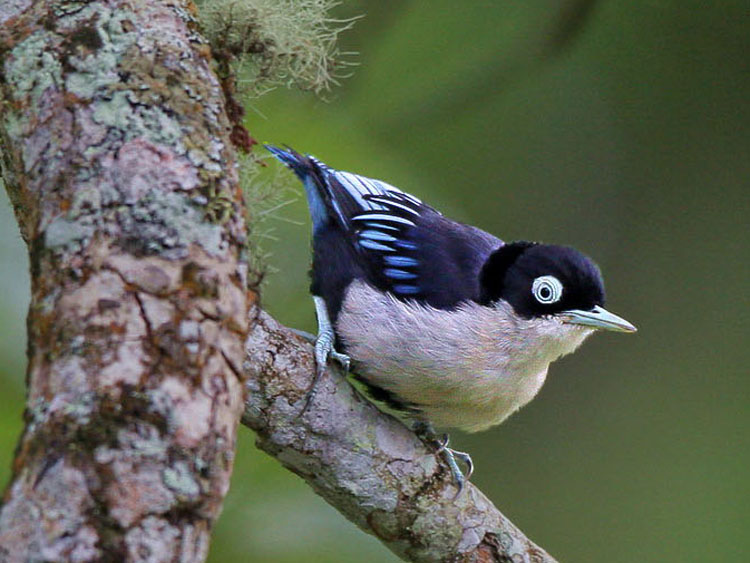
Nuthatch,_Blue Sitta azurea Found: Indosesia, Malaysia
The Blue Nuthatch has dark blue upperparts; whitish throat, breast; dark blue belly; striking white eyes.
Image by: 1) Francesco_Verones - Malaysia 2, 3) Hiyashi_Haka 4) Francesco_Veronesi.jpg)

Nuthatch,_Brown-headed Sitta pusilla Found: southeastern USA.
Similar to: Pygmy Nuthatch. Pygmy Nuthatch smaller than Brown-headed Nuthatch. Brown-headed Nuthatch has brown head; Pygmy Nuthatch has gray head,
Image by: 1, 2, 5, 6, 7) Dick Daniels - North Carolina 3) Vickie Deloach - Georgia 4) Jamie_Chavez - Georgia


Nuthatch,_Burmese Sitta neglecta Found: Cambodia, Laos, Myanmar, Thailand, Vietnam.
Image by: 1) David_Cook - Cambodia 2, 3) Susan_Meyers - Cambodia
2) Female 3) Male


Nuthatch,_Chestnut-bellied Sitta cinnamoventris Found: Bhutan, India, Nepal, Tibet
The Chestnut-bellied Nuthatch has blue-gray upperparts, crown; black eye-line; white face, chin; chestnut underparts, throat.
Similar to: Indian Nuthatch. The Chestnut-bellied Nuthatch has richer underparts than the Indian Nuthatch.
Image by: 1, 4) Koshy_Koshy - India 2) Francesco_Veronesi - Bhutan 3) Dibyendu_Ash - Ghatgarh, Uttarakhand, India Similar to: Indian Nuthatch. The Chestnut-bellied Nuthatch has richer underparts than the Indian Nuthatch.

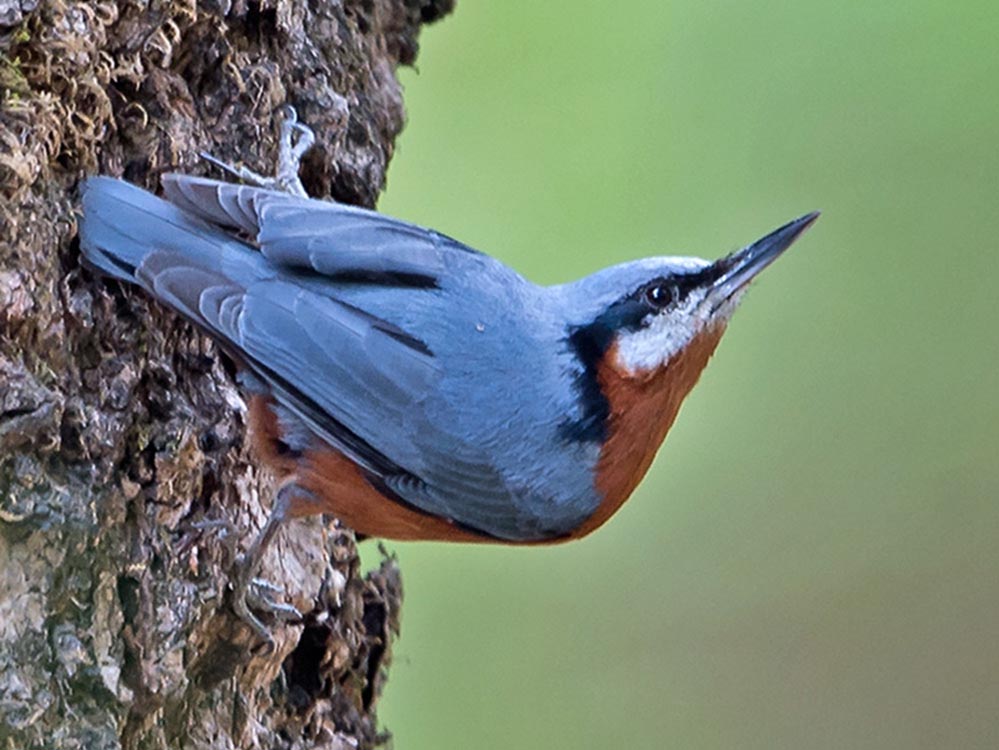


Nuthatch,_Chestnut-vented Sitta nagaensis Found: Bangladesh, China, India, Laos, Myanmar, Thailand, Vietnam
Image by: 1) totodu74 2, 3) Ron_Knight - Sichuan 4) Jerry_Oldenettel - Vietnam

.jpg)


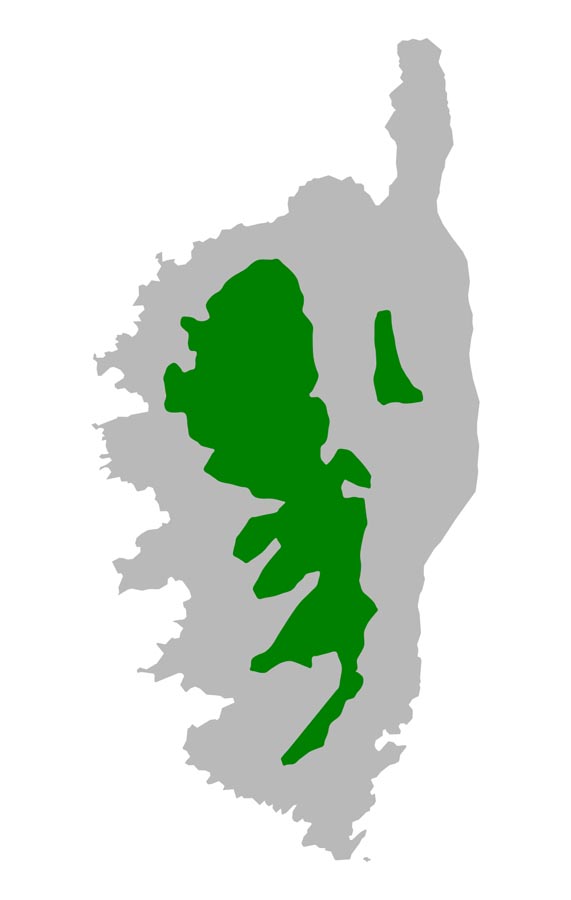
Nuthatch,_Corsican Sitta whiteheadi Found: Corsica (island in Mediterranean)
The male Corsican Nuthatch has blue-gray upperparts; black crown, eye-line; white supercilium; grayish-buff underparts. Female similar to male but has gray crown, eye-line.
Image by: 1) tododu74 2) John_Gerrard_Keulemans 2) 


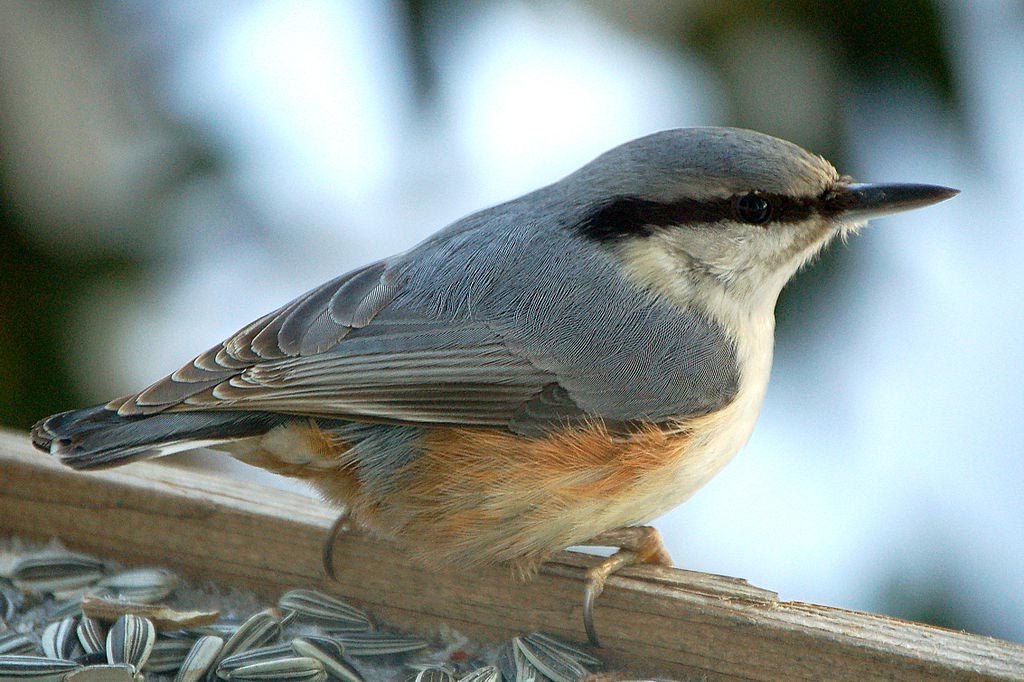
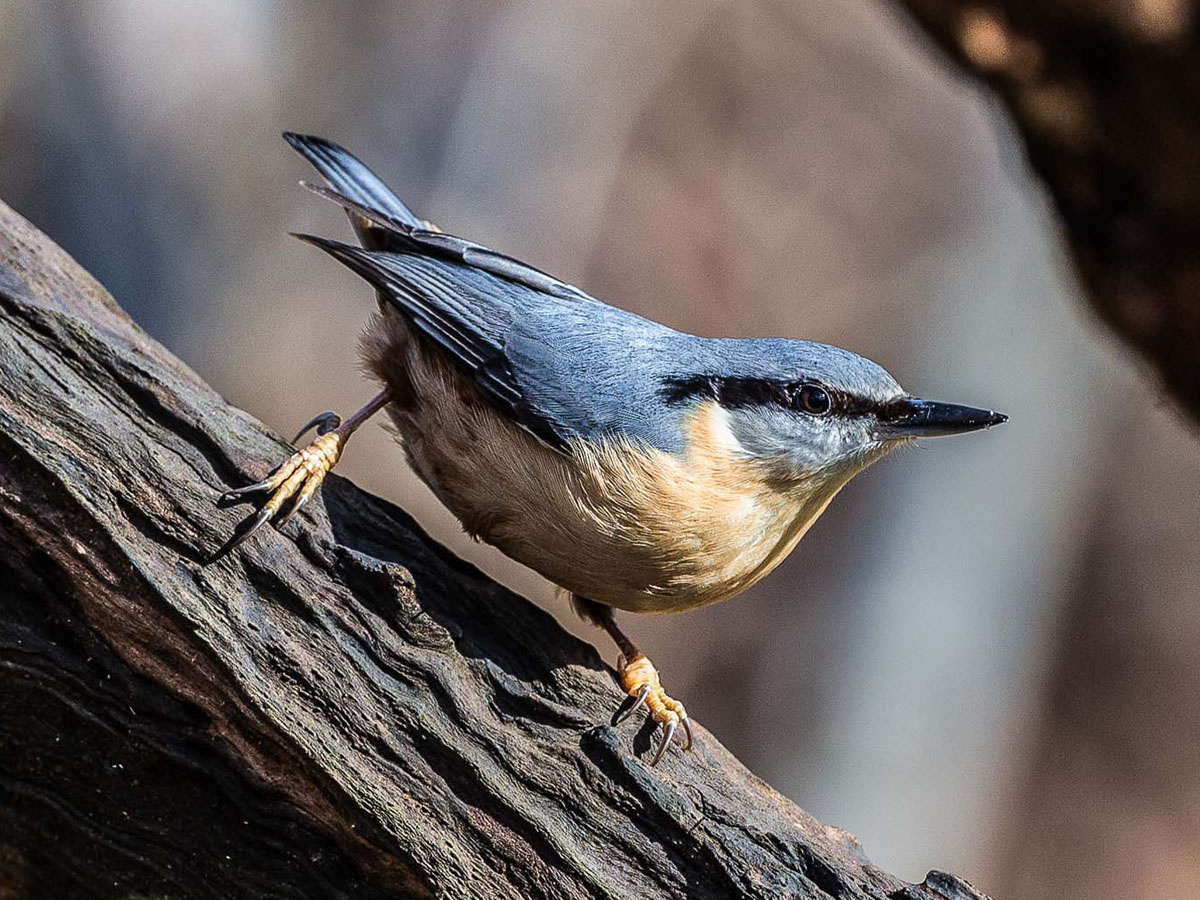
Nuthatch,_Eurasian Sitta europaea Found: Europe, Asia
The Eurasian Nuthatch has blue-gray upperparts; black eye-stripe; short tail.white face, chin; light orange underparts.
Similar to: Red-breasted Nuthatch. Range of Eurasian Nuthatch and Red-breasted Nuthatch do not overlap. Both of these Nuthatches have a dark eye-line. There is white above the Red-breasted Nuthatch's eye-line, none above the Eurasian Nuthatch's eye-line.
Image by: 1) Arnstein Ronningn - Norway 2) Pawel
Kuzniar 3) Cristiano Crolle - Val Roseg, Switzerland 4) Smudge_9000 - EnglandSimilar to: Red-breasted Nuthatch. Range of Eurasian Nuthatch and Red-breasted Nuthatch do not overlap. Both of these Nuthatches have a dark eye-line. There is white above the Red-breasted Nuthatch's eye-line, none above the Eurasian Nuthatch's eye-line.




Nuthatch,_Giant Sitta magna Found: China, Thailand
The Giant Nuthatch is the largest nuthatch. It has gray upperparts; bold black eye-line; white throat, underparts. Male has wider eye-line than female. Female has fainly rufous underpart.
Image by: 1) Joseph_Smit 2) Jerry_Oldenettel - Thailand
1) Female 2) Male


Nuthatch,_Indian Sitta castanea Found: India, south of the Ganges River.
The Indian Nuthatcn has a frosty crown that is paler than the mantle. It is the only gray-backed, rufous-bellied nuthatch in the peninsula.Sitta castanea also consider to include the Chestnut-bellied Nuthatch (Sitta cinnamoventris)
Similar to: Chestnut-bellied Nuthatch. The Chestnut-bellied Nuthatch has richer underparts than the Indian Nuthatch.
Image by: 1) Balaji Venkatesh Sivaramakrishnan 2) Cks3976 - Dandeli, IndiaSimilar to: Chestnut-bellied Nuthatch. The Chestnut-bellied Nuthatch has richer underparts than the Indian Nuthatch.


Nuthatch,_Kashmir Found: Afghanistan, India, Nepal Pakistan
Image by: 1) L_Shyamal 2) Gaurav_Kataria - Kashmir, India 32) James_Eaton


Nuthatch,_Krüper's Sitta krueperi Found: southeastern Europe, southwestern Asia
Image by: 1) Mark Jobling 2) Frank Vassen

,_Achladeri_Forest,_Lesvos,_Greece,_16.04.2015_(2).jpg)


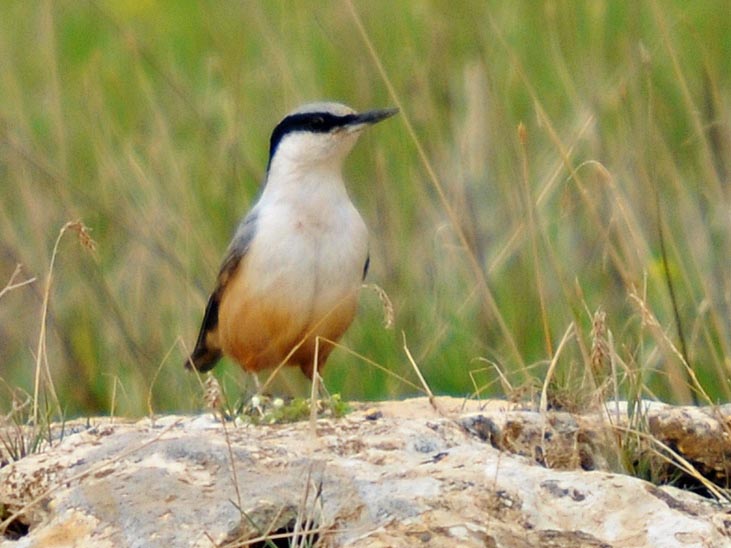
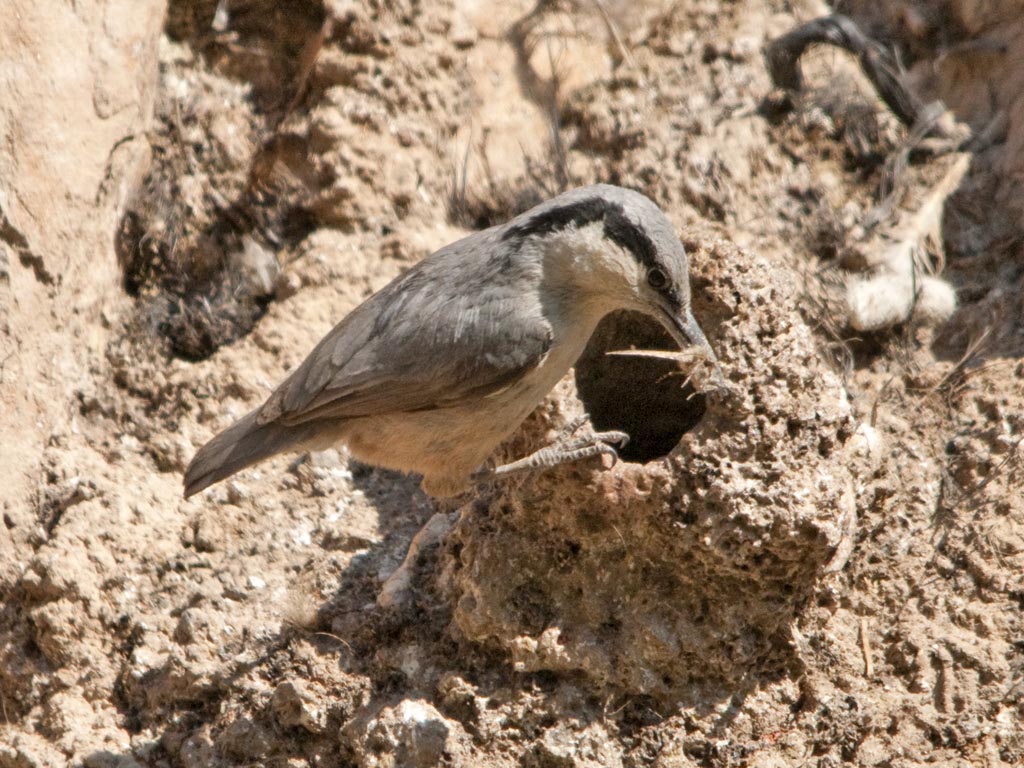
Nuthatch,_Persian also Eastern Rock Nuthatch Sitta tephronota Found: Asia
Image by: 1, 2, 3) Durzan_Cirano - Turkey 4) Sergey_Yeliseev




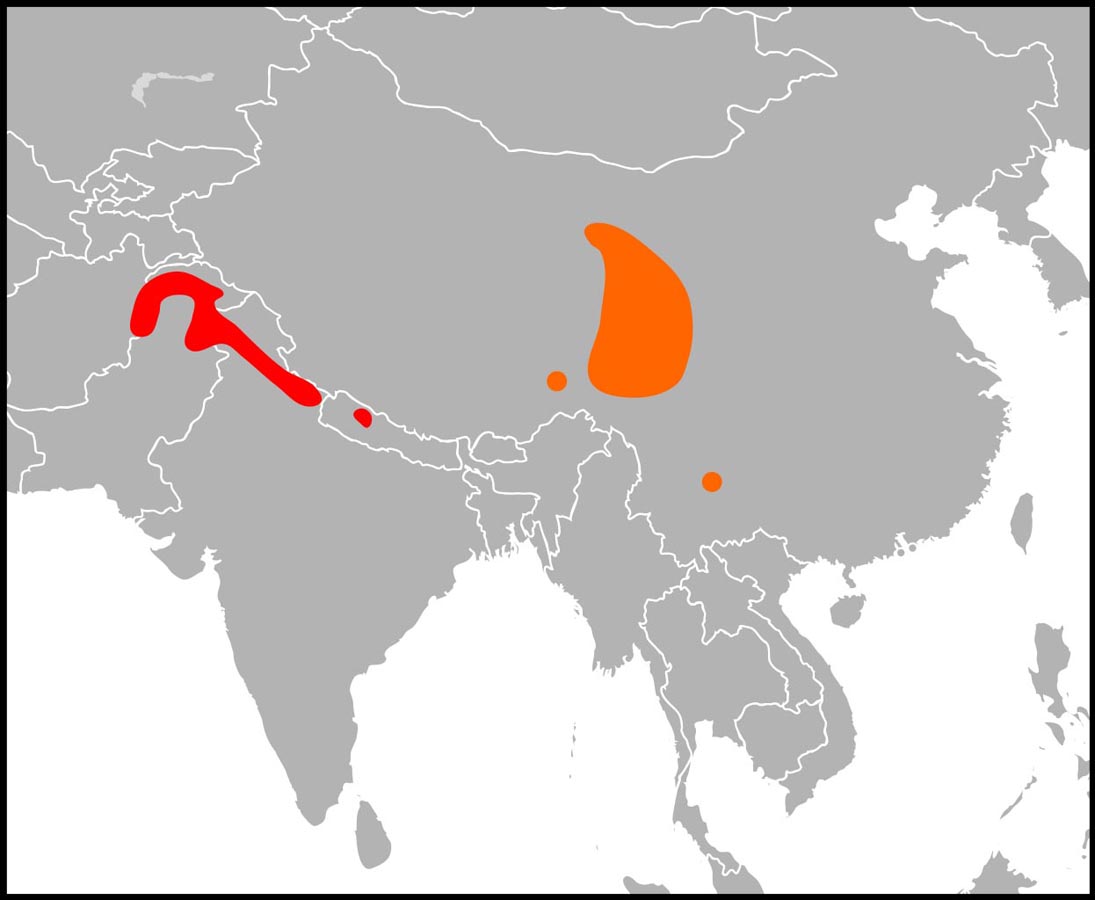
Nuthatch,_Przevalski's Sitta przewalskii Found: southeastern Tibet, west central China
The Przevalski's Nuthatch has dark gray-bule upperparts; dark blue-black crown; white cheeks, throat; cinnamon underparts. The Przevalski's Nuthatch has been considered a subspecies of the White-cheeked Nuthatch.
Image by: 1) tododu74 2) Chengdong_WANG

Nuthatch,_Pygmy Sitta pygmaea Found: west and central North America
Similar to: Brown-headed Nuthatch. Pygmy Nuthatch smaller than Brown-headed Nuthatch. Brown-headed Nuthatch has brown head; Pygmy Nuthatch has gray head,
Image by: 1) Alan D Wilson 2) Dick Daniels - Arizona 3) Len
Blumin - Homestead Valley, Mill Valley, CA.


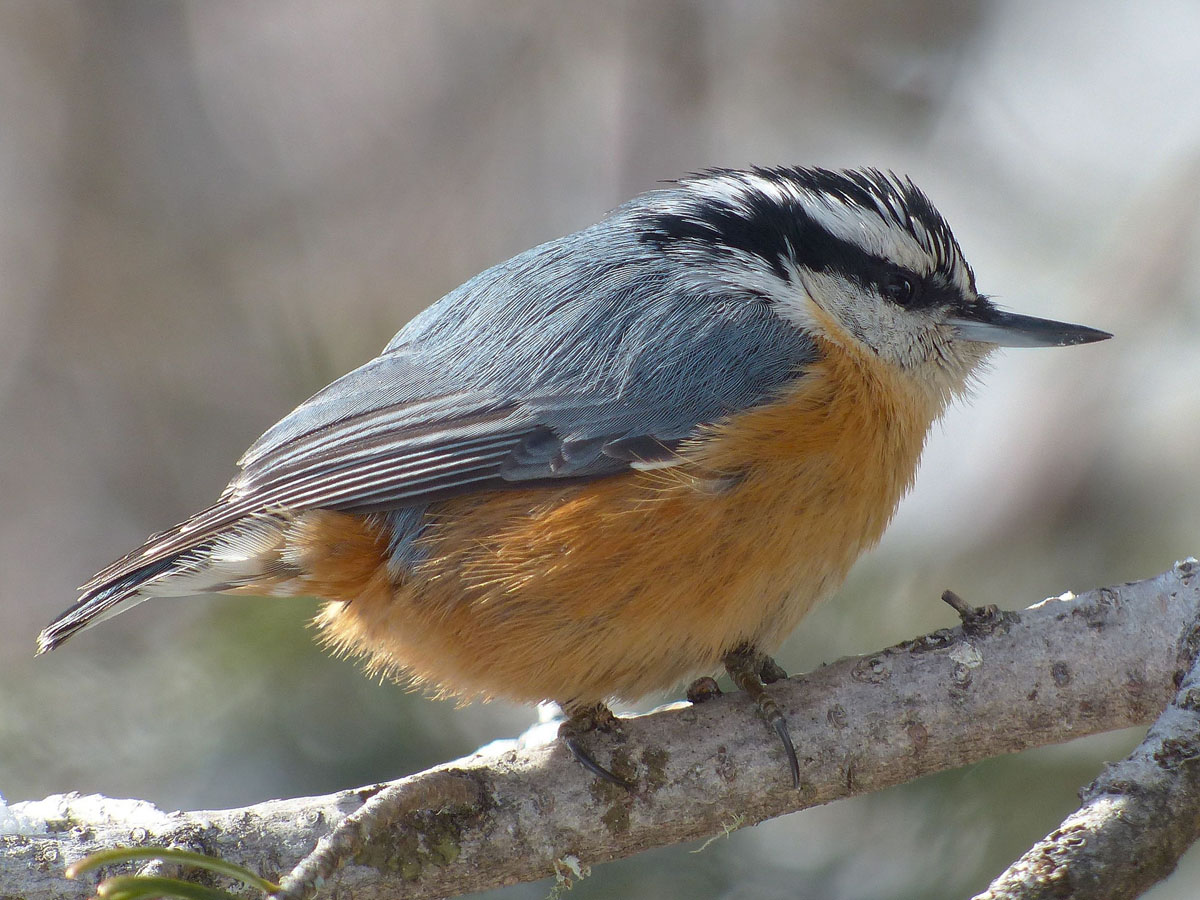
Nuthatch,_Red-breasted Sitta canadensis Found: North America
No other North American Nuthatches have an eye-line.
Similar to: Eurasian Nuthatch. Range of Eurasian Nuthatch and Red-breasted Nuthatch do not overlap. Both of these Nuthatches have a dark eye-line. There is white above the Red-breasted Nuthatch's eye-line, none above the Eurasian Nuthatch's eye-line.
Similar to: White-breasted Nuthatch. White-breasted Nuthatch has white underparts; Red-breasted Nuthatch underparts only have a white throat.
Image by: 1) Cephas - Quebec 2) Jerry Oldenettel - New Mexico 3) Eugene_Beckes 4) Wolfgang_WanderSimilar to: Eurasian Nuthatch. Range of Eurasian Nuthatch and Red-breasted Nuthatch do not overlap. Both of these Nuthatches have a dark eye-line. There is white above the Red-breasted Nuthatch's eye-line, none above the Eurasian Nuthatch's eye-line.
Similar to: White-breasted Nuthatch. White-breasted Nuthatch has white underparts; Red-breasted Nuthatch underparts only have a white throat.




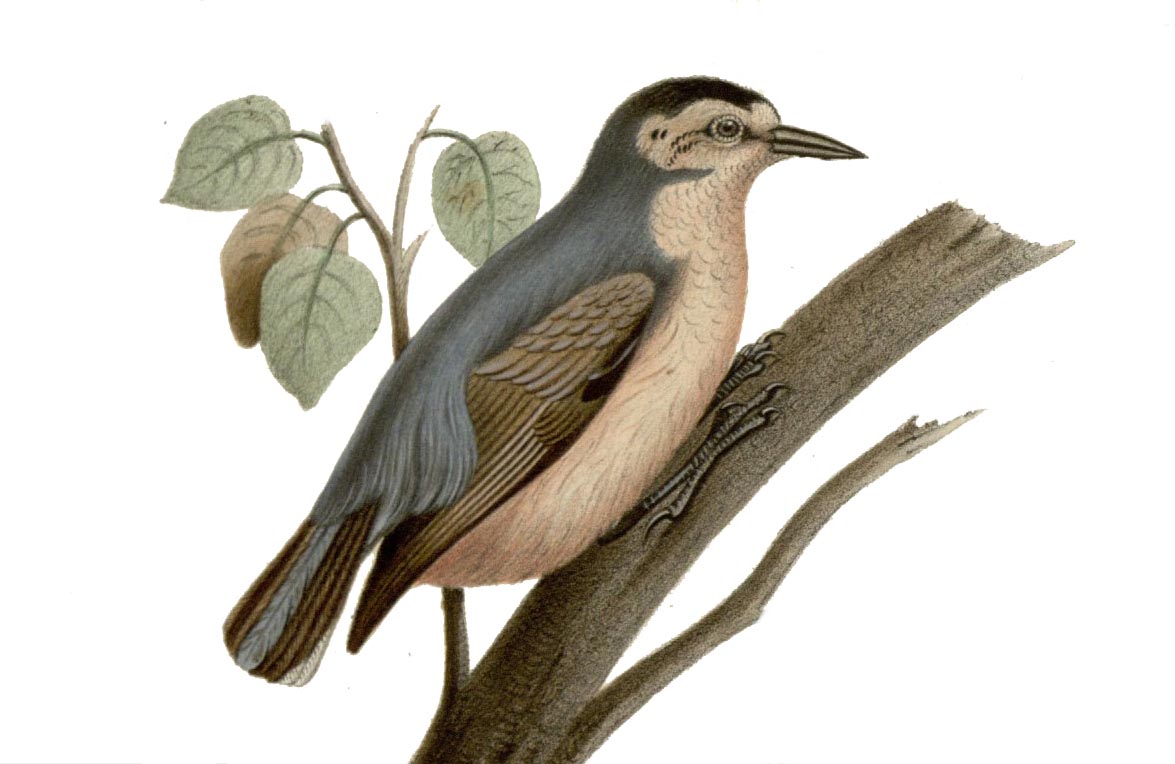
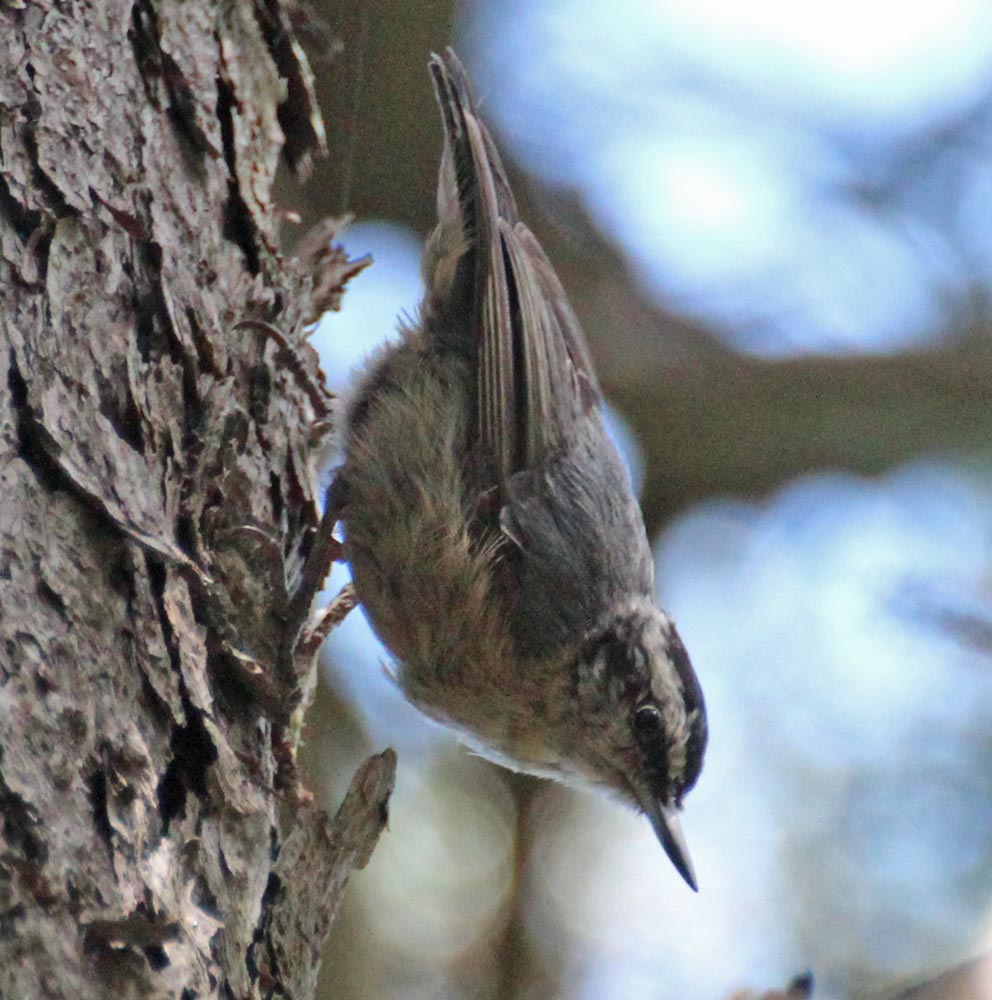
Nuthatch,_Snowy-browed also Chinese Nuthatch Sitta villosa Found: China, North Korea, South Korea
The Snowy-browed Nuthatch has bluish-gray upperparts; buffy to orange-cinnamon underparts. Male has black cap; eye-line; white supercilium; whitish throat, cheeks.. Female has neglible eye-line.
Image by: 1) tododu74 2) Josephe_Huet 3) Gary_Leavens 4) Yann_Muzika



Nuthatch,_Sulphur-billed Sitta oenochlamys Found: Philippines
Image by: 1) onnie_espena 2) Francesco_Veronesi - Mindanao

.jpg)


Nuthatch,_Velvet-fronted Sitta frontalis Found: Asia
The Velvet-fronted Nuthatch has violet-blue upperparts; lavender cheeks; black patch on forehead; whitish throat; beige underparts; red bill.
Image by: 1) Lip Kee Yap - Kazaringa, Assam, India 2) Andrew_Siani 3) Vimal_Rajyaguru 4) Shrikant_Rao in India
.jpg)


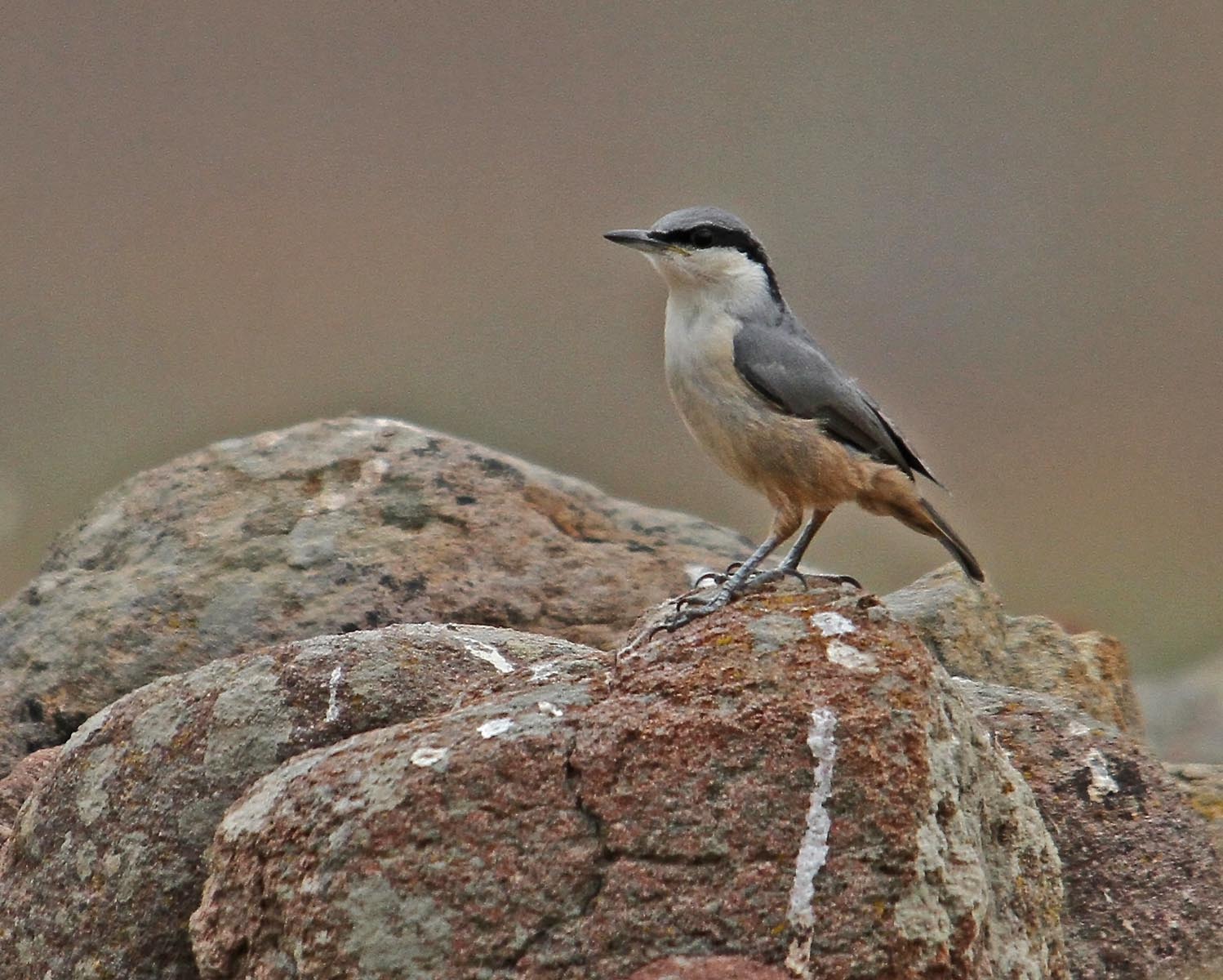
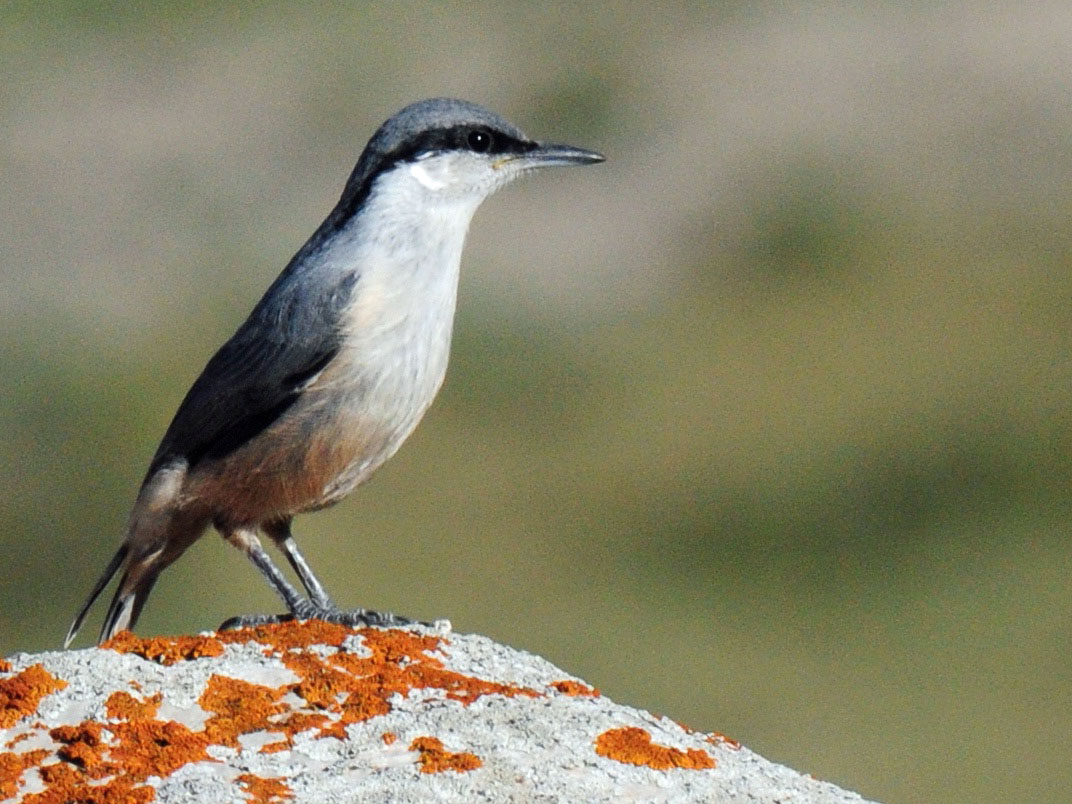
Nuthatch,_Western Rock also Rock Nuthatch Sitta neumayer Found: Europe, Asia
The Western Rock Nuthatch has dark gray upperparts; long black eye-line; white throat; white underparts shading to buff on belly.
Image by: 1, 3) Michael_Sveikutis - Greece 3) Vince_Smith - Turkey

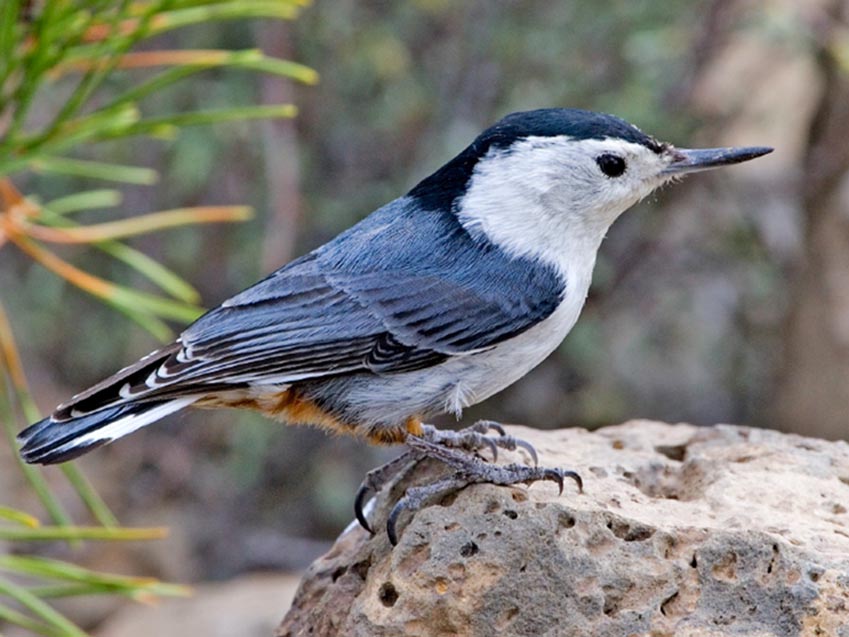
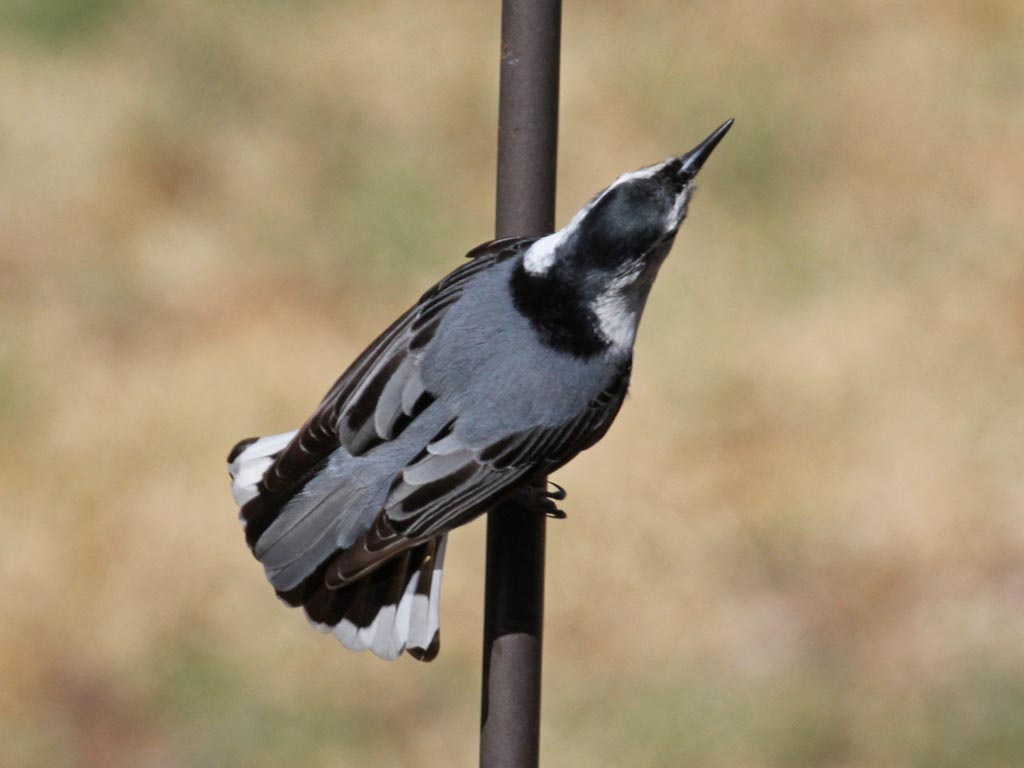
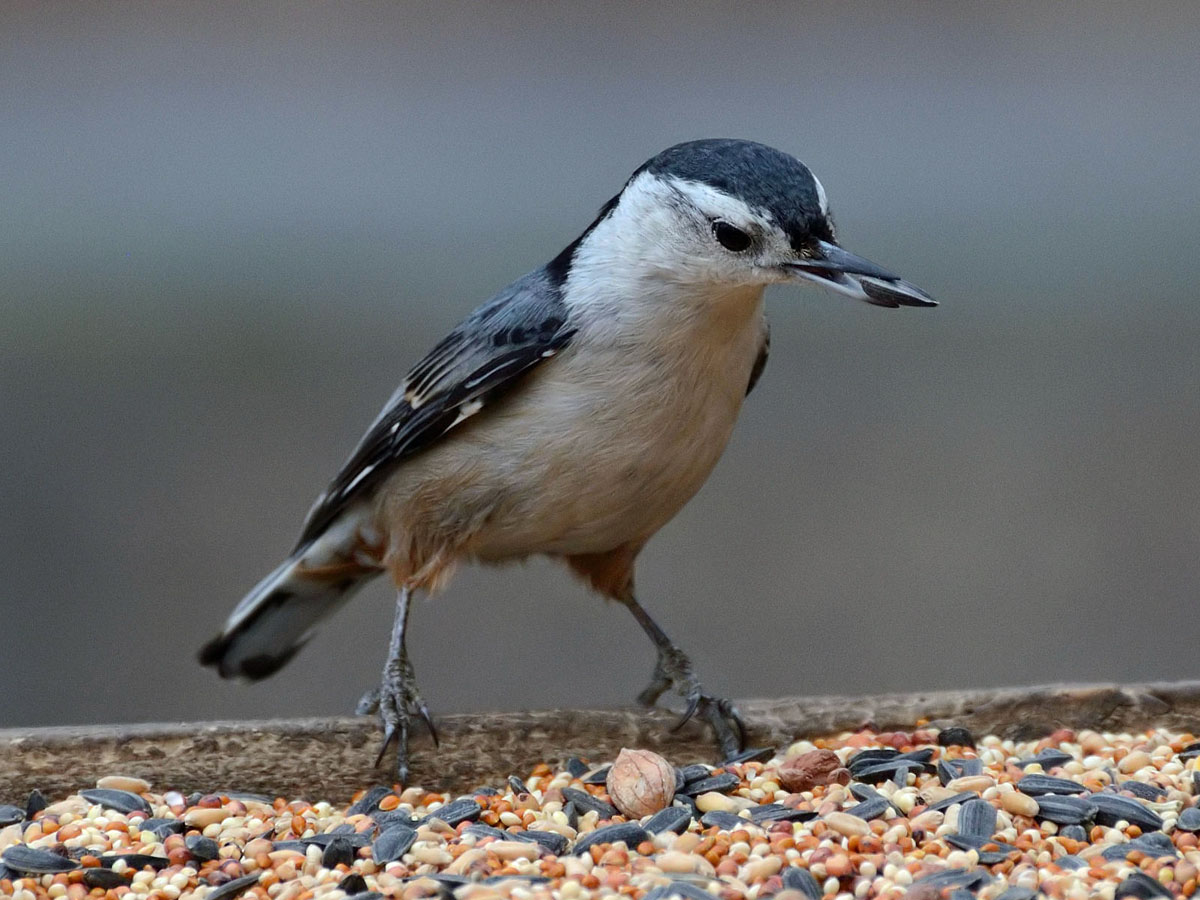
Nuthatch,_White-breasted Sitta carolinensis Found: North America
Similar to: Red-breasted Nuthatch. White-breasted Nuthatch has white underparts; Red-breasted Nuthatch underparts only have a white throat.
Image by: 1) Johnny Wee - near Fort Rock, Oregon 2) Mdf-
Canada 3, 4, 5, 6)
Dick Daniels -Ash, North Carolina
7) Mark_Nenadov - Ontario






Nuthatch,_White-browed Sitta victoriae Found: Myanmar
Image by: 1) James_Eaton 2) Michelle_and_Peter_Wong


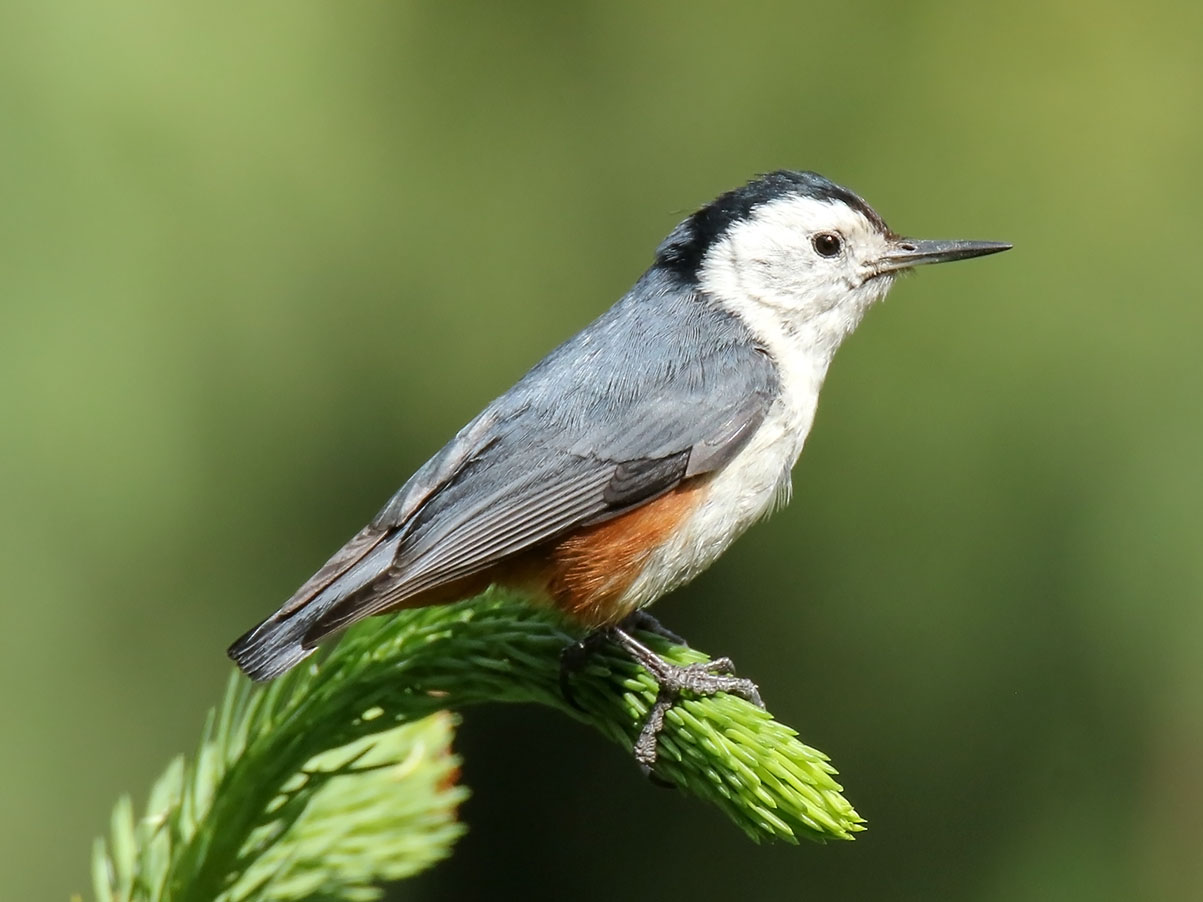
Nuthatch,_White-cheeked Sitta leucopsis Found: Afghanistan, Bhutan, India, Nepal, Pakistan Image by: 1, 2, 3) Imran_Shah - Pakistan
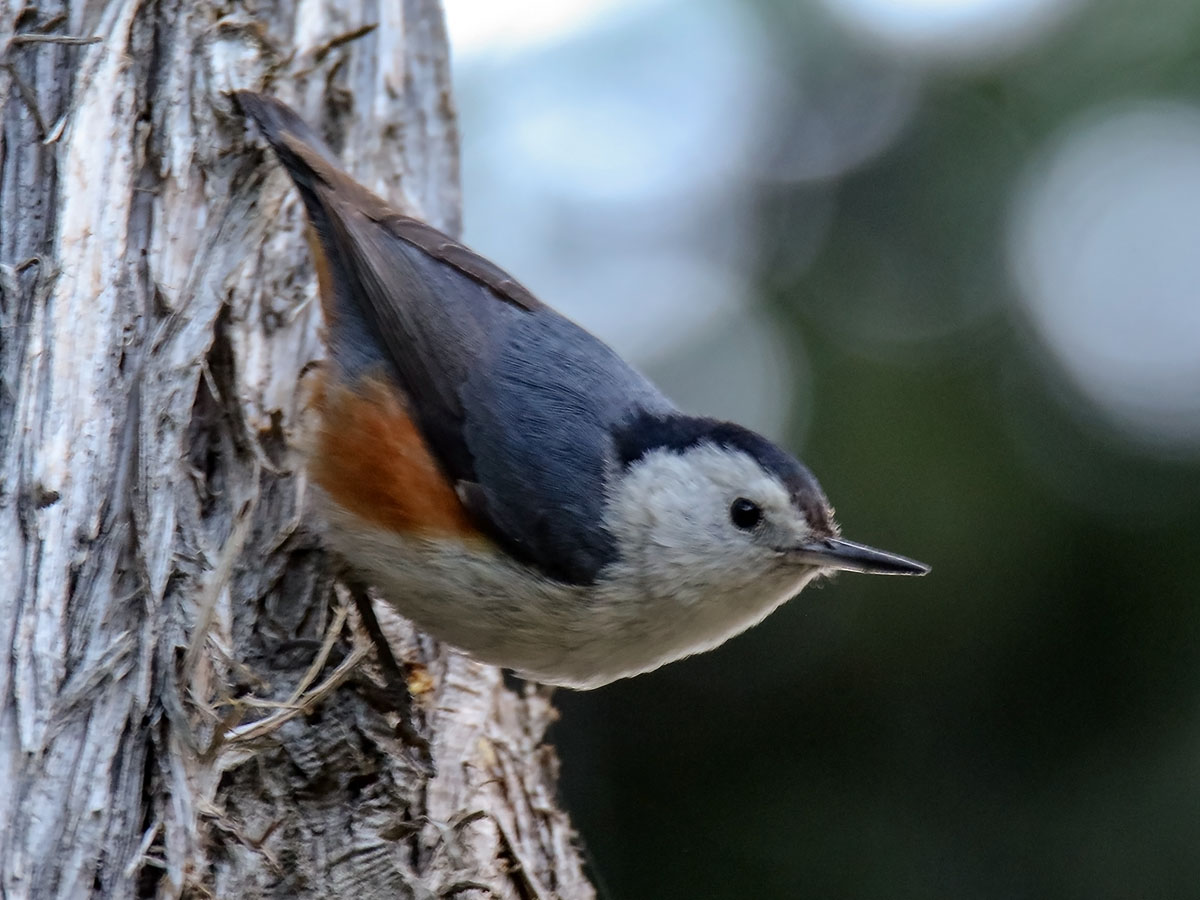

Nuthatch,_White-tailed Sitta himalayensis Found: northern and northeastern parts of the Indian Subcontinent
The White-tailed Nuthatch has rufous underparts; white on upper-tail coverts hard to see.
Image by: 1) Ron_Knight 2) Dibyendu_Ash - India 3) Shrikant_Rao in India 4) Francesco_Verones

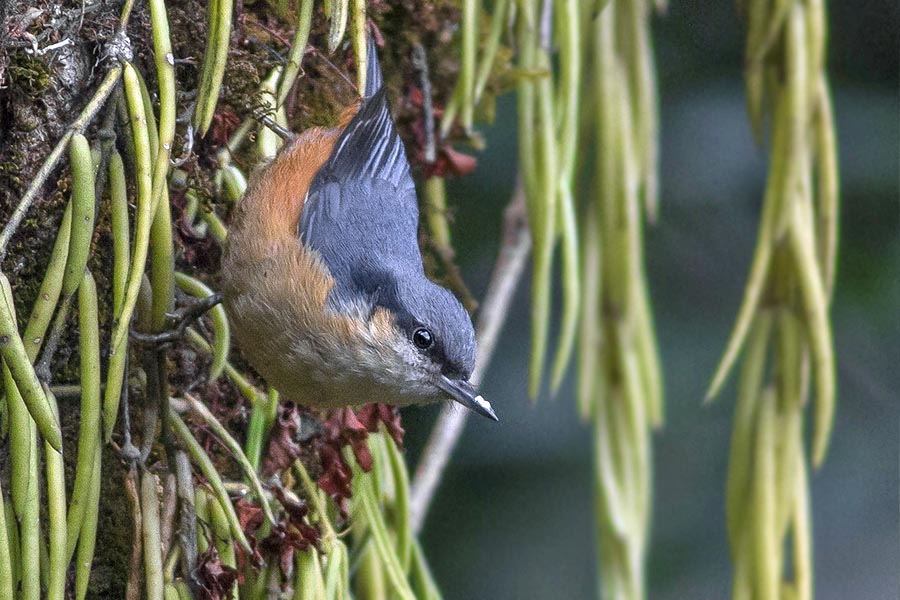


Nuthatch,_Yellow-billed Sitta solangiae Found: Chin, Laos, Vietnam
Image by: 1) L_Shyamal 2) John_and_Jemi_Holmes - China


Nuthatch,_Yunnan Sitta yunnanensis Found: southwest China
The Yunnan Nuthatch has blue-gray upperparts; bolc black eye-line; thin white supercilium.
Image by: 1) tododu74 2) Bernd_Kirschner 3) Soma_Jha


Family Tichodromidae
Genus Tichodroma - 1 species
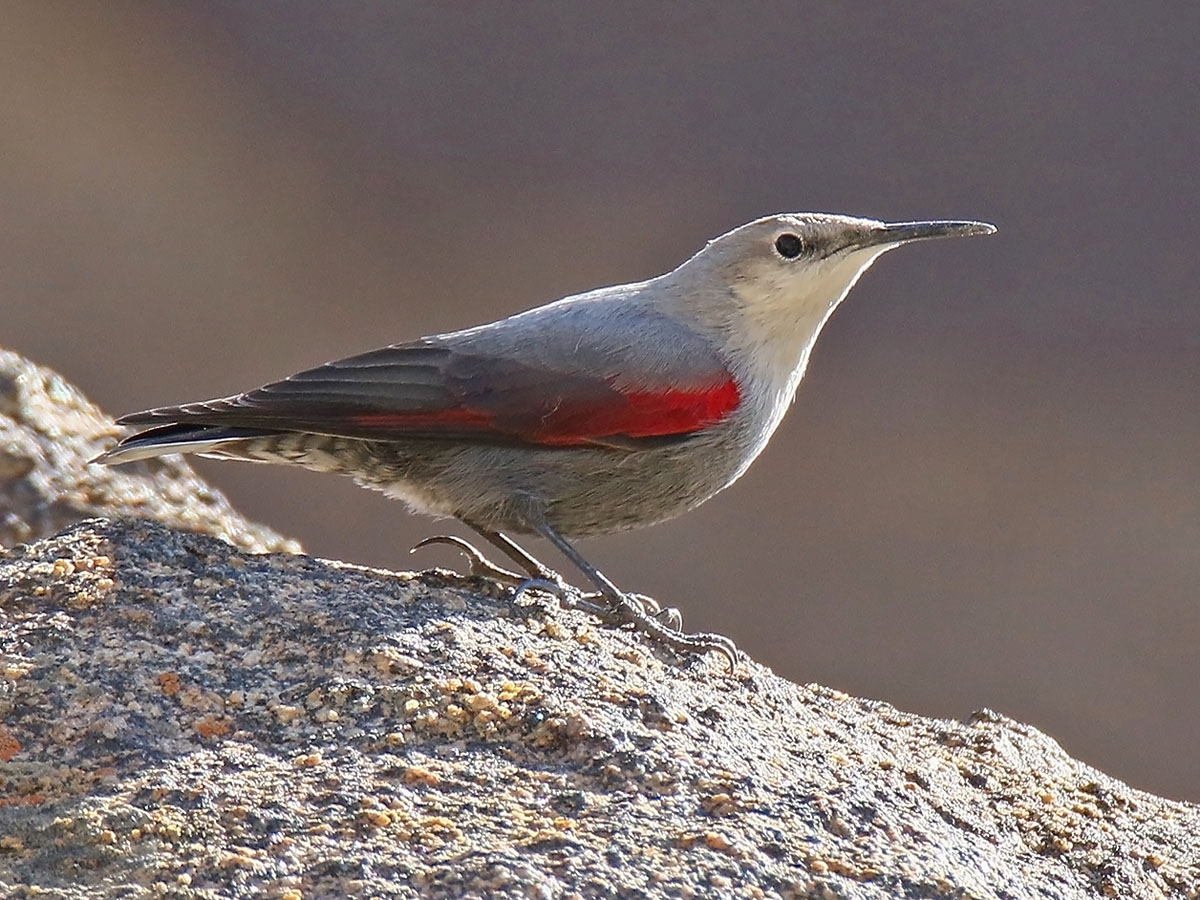
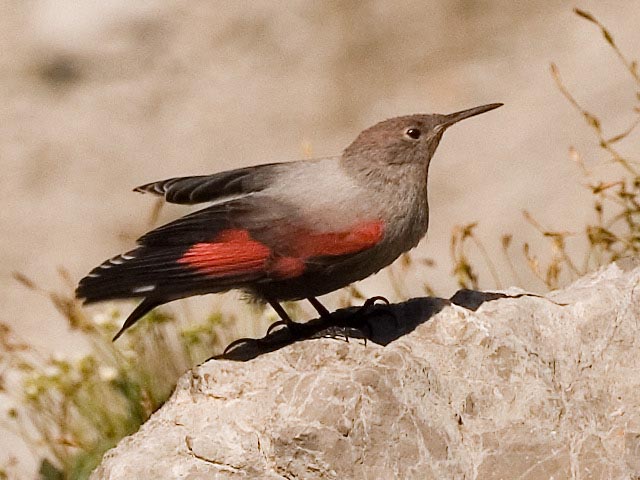
Wallcreeper Tichodroma muraria Found: Asia
The Wallcreeper has mainly grayish plumage; crimson wings; long thin bill.
Some place the Wallcreeper in its own family or with the treecreeprs of family .
Image by: 1, 2) Imran_Shah - Pakistan 3) Hämbörger 4) Ján SvetlíkSome place the Wallcreeper in its own family or with the treecreeprs of family .



TREECREEPERs
Order Passeriformes Family Certhiidae
The treecreepers are widespread in wooded regions of the Northern Hemisphere and sub-Saharan Africa. Their plumage is dull-coloured, and as their name implies, they climb over the surface of trees in search of food. All species of treecreeper are found in forest and woodland habitats. Treecreepers measure from 12 to 18 centimetres in length. Their bills are gently down-curved and rather long, used for probing bark for insects and spiders. They often climb up tree trunks in a helical path, hopping with their feet together; their toes are long and tipped with strongly curved claws for gripping. The longer tails of the Certhia treecreepers are stiffened to use as a prop while climbing, but those of the Spotted Creeper are shorter and not stiffened. The majority of their diet is composed of small invertebrates, including insects and their larvae, spiders, and pseudoscorpions. In hard times seeds and fruits may be taken, and a few species will also visit birdfeeders.
Genus Certhia
Creepers usually head up the tree; Nuthatches usually head down the tree.
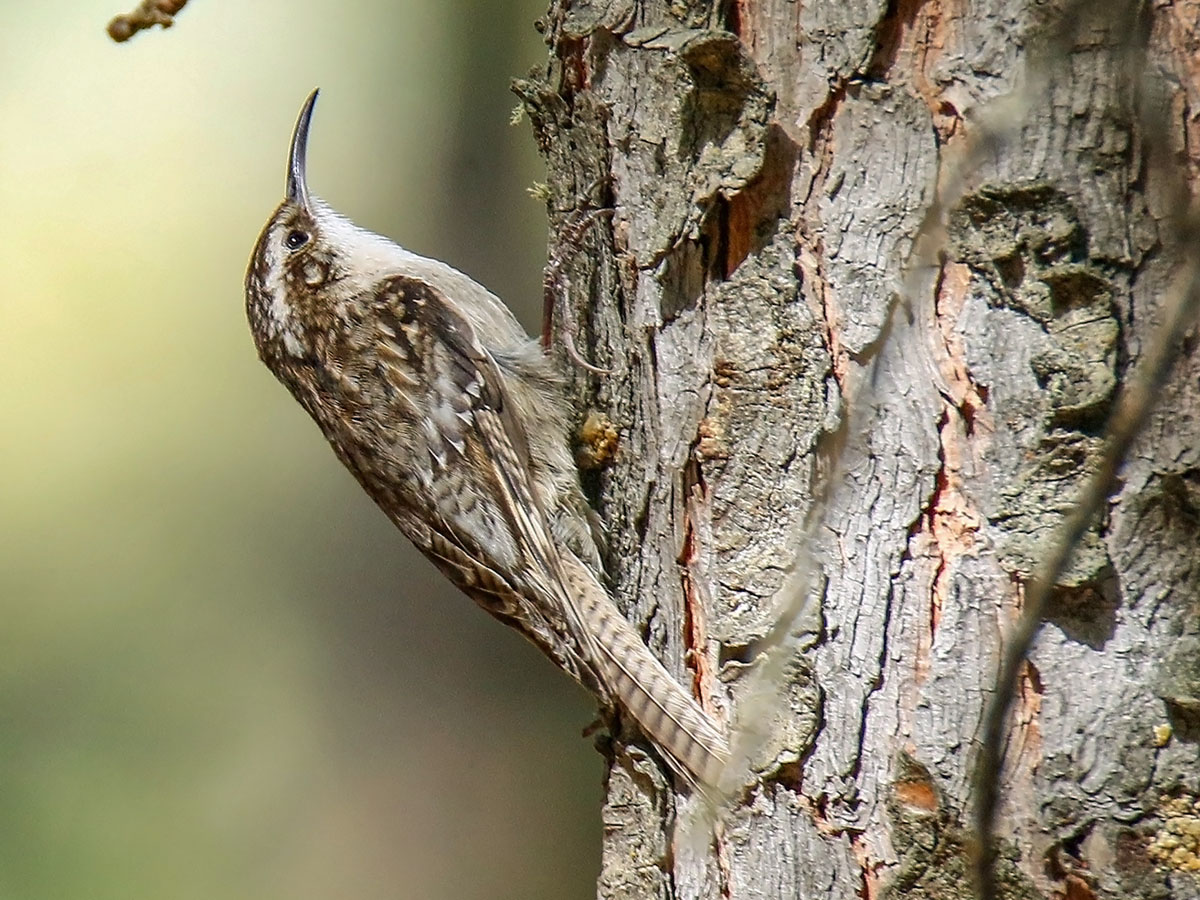
Treecreeper,_Bar-tailed also Himalayan Tree Creeper Certhia himalayana Found: northern parts Indian subcontinent
The Bar-tailed Treecreeper has a flecked or striped feather pattern, usually in black, brown, white and red hues.
Image by: 1) Chandu Bandi 2) JM Garg - India 3) Imran_Shah - Pakistan 4) Allan Hopkins - India

1) Juvenile



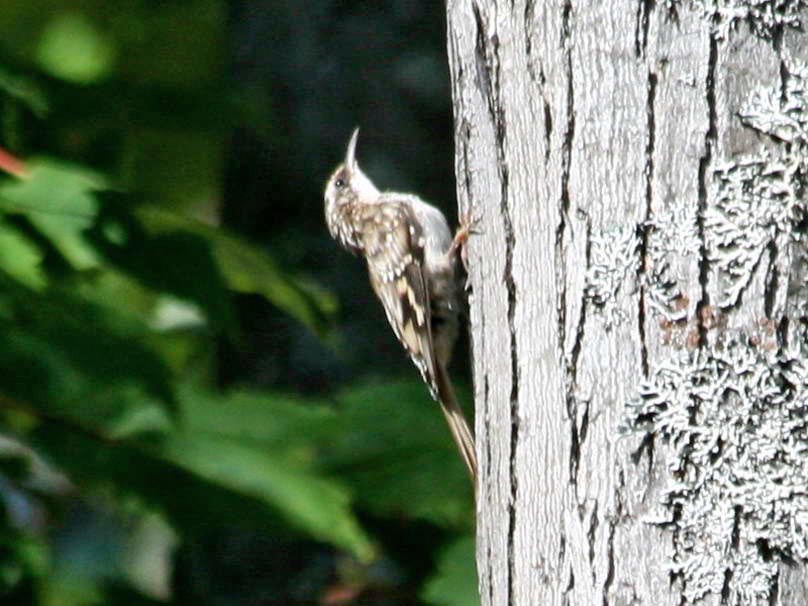
Creeper, Brown Certhia americana Found: North America
Image by: 1) Alan Vernon - Alaska 2) Alan D Wilson - British Columbia 3) Martha McClintock 4) Dick Daniels - New Hampshire

1, 2) Birds were heading up the tree, thumbnails rotated to produce larger image.


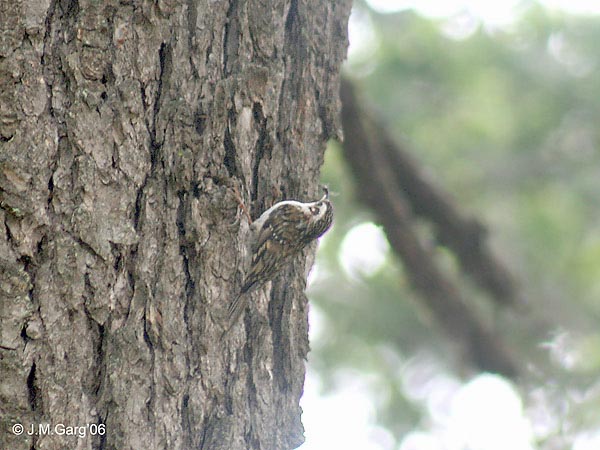
Treecreeper,_Common also Eurasian Treecreeper Certhia familiaris Found: Europe, Asia
The Common Treecreeper has a curved bil;, patterned brown upperparts; whitish supercilium,underparts; long stiff tail feathers which help it creep up tree trunk.s
Image by: 1) Pawel Kuzniar 2) Charlie Westerinen - Warsaw, Poland


Treecreeper,_Hodgson's Certhia hodgsoni Found: southern Asia
The Hodgson's Treecreeper has patterned brown upperparts; off-white supercilium, underparts.
Image by: 1) JM Garg - India 2) Jon Irvine - Bhutan

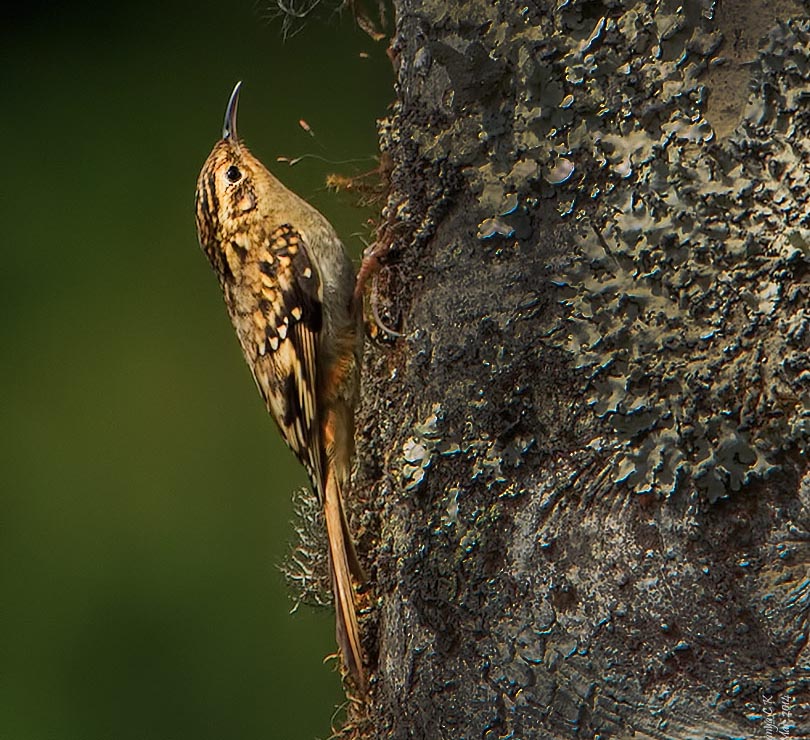
Treecreeper,_Humes Certhia manipurensis Found: southeast Asia
Image by: 1) lonelyshrimip

Treecreeper,_Rusty-flanked Certhia nipalensis Found: Bhutan, China, India, Myanmar, and Nepal
Image by: 1) Subramanya - West Bengal 2) Gauray Bhatnagar


Treecreeper,_Short-toed Certhia brachydactyla Found: Europe, Asia
Image by: 1, 4) Jimfbleak 2) Agustin_Povedano - Spain 3) Aleph


Treecreeper,_Sichuan Certhia tianquanensis Found: old growth forests of Faber's fir in mountains of Sichuan, China
Image by: 1) Ron Knight - Wawu Shan, Sichuan
.jpg)

Treecreeper,_Sikkim also Brown-throated Treecreeper Certhia discolor Found: Asia
Image by: 1) JJ Harrison - Thailand 2) Francesco Veronesi - Bhutan


Genus Salpornis
These creepers, unlike the treecreepers, do not use their tails while climbing. They weigh twice as much as treecreepers of similar length
Creeper, African Spotted- Salpornis salvadori Found: Africa
The African Spotted-Creeper is strongly barred and spotted. It has a thin pointed down-curved bill; dark eye-line.
Image by: 1) Graham Ekins - Zimbabwe
Creeper, Indian Spotted- Salpornis spilonotus Found: northern Indian subcontinent
The Indian Spotted-Creeper has gray and white spotteed and barred plumage. It has a thin pointed down-curved bill; dark eye-line.
Image by: 1) John Gerrard Keulemans 2) Sumeet Moghe 3)Nigel Voaden


Australasian TREECREEPERs
Order Passeriformes Family Climacteridae
The Australasian Treecreepers are not closely related to the Holarctic Treecreepers of family Certhiidae, but they do resemble each other because of convergent evolution. Their plumage is dull-coloured, and as their name implies, they climb over the surface of trees in search of food. Unlike the Holarctic treecreepers, they do not use their tail for support when climbing tree trunks, only their feet. They are found in Australasia.
Genus Climacteris
Treecreeper,_Black-tailed Climacteris melanurus Found: north and northwestern Australia
Image by: 1, 2) Brian_McCauley

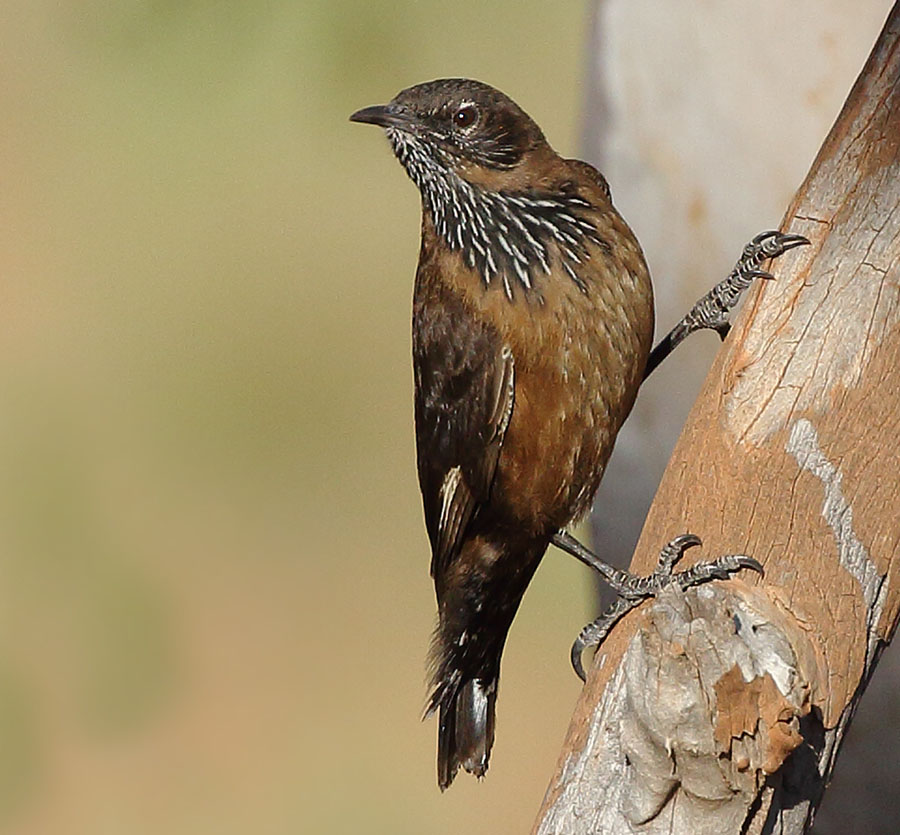
Treecreeper,_Brown Climacteris picumnus Found: Australia
The Brown Treecreeper has gray-brown upperparts; light gray face, neck; darker gray crown; dark eye-line; pale throat; pale brown breast; streaked lower breast, flanks.
Image by: 1) Laurie_Boyle 2) David Cook - Victoria, Australia 3) Avicida - Bowra, SW Queensland, Australia 4) Oystercatcher
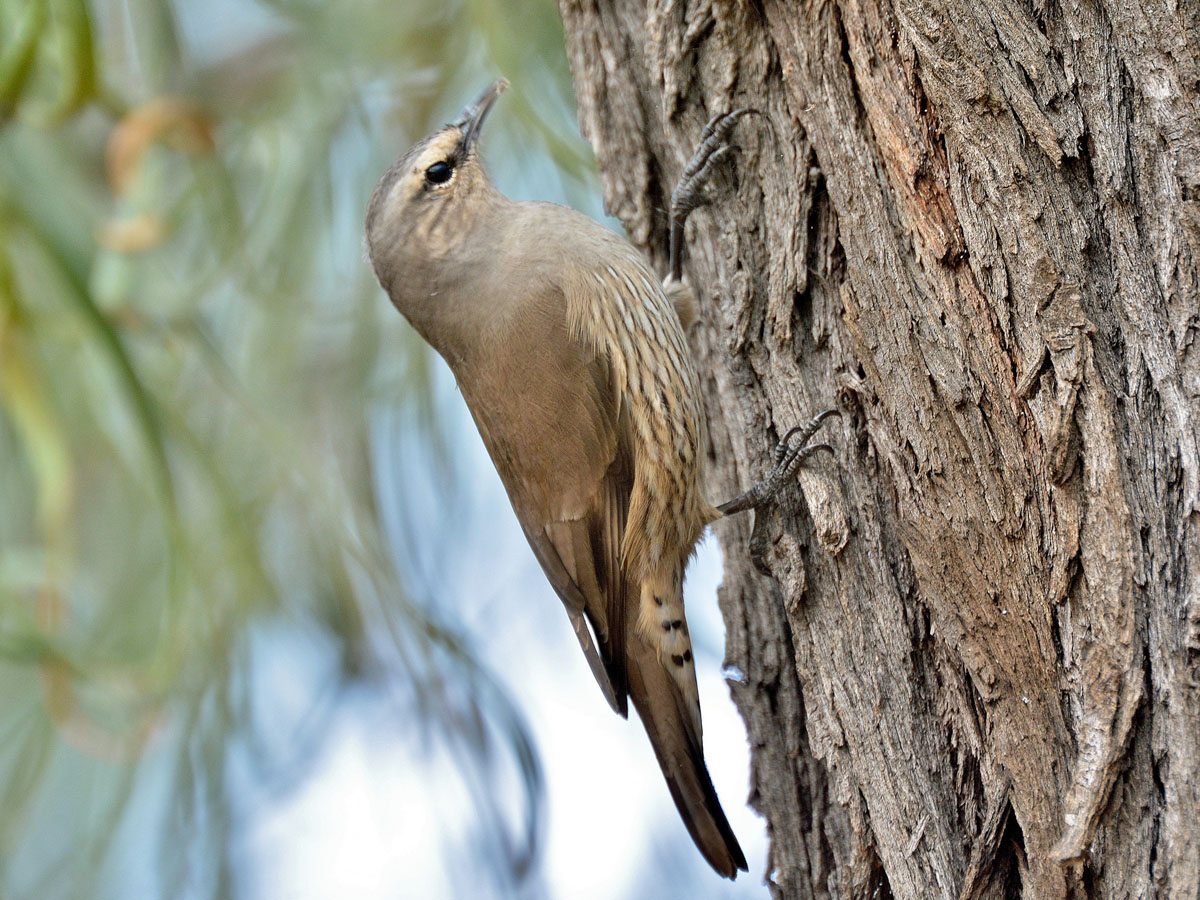


Treecreeper,_Red-browed Climacteris erythrops Found: Australia
The Red-browed Treecreeper has dark brown back; red supercilium.
Image by:1) MDE kool 2) Tom Tarrant


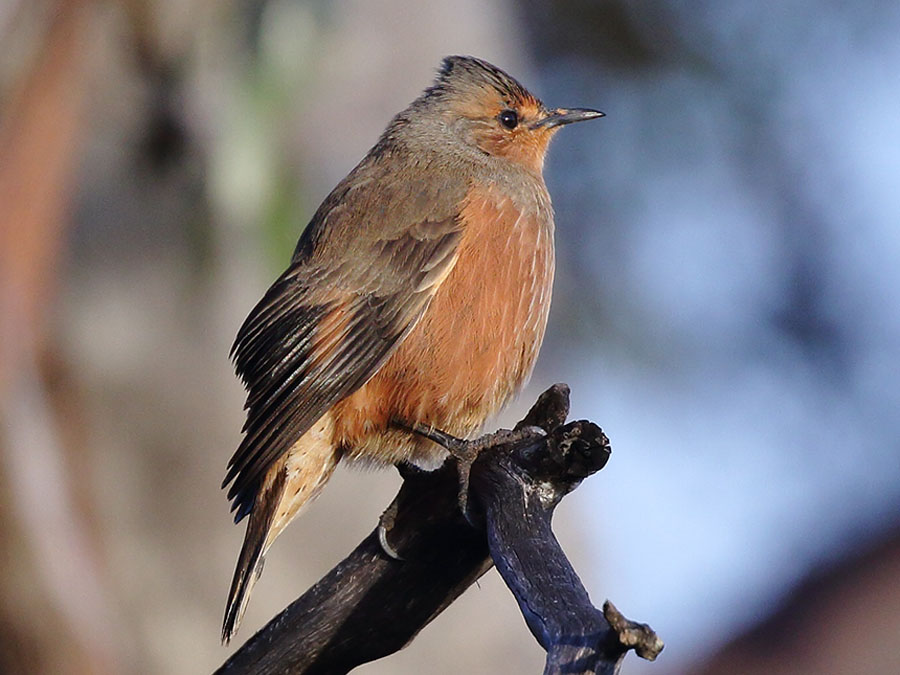
Treecreeper,_Rufous Climacteris rufus Found: Australia
The Rufous Treecreeper has brown back; gray head; rufous face, breast. Male has dark streaks on breast; female has pale streaks.
Image by:
1, 2) Brian_McCauley1) Female 2) Male

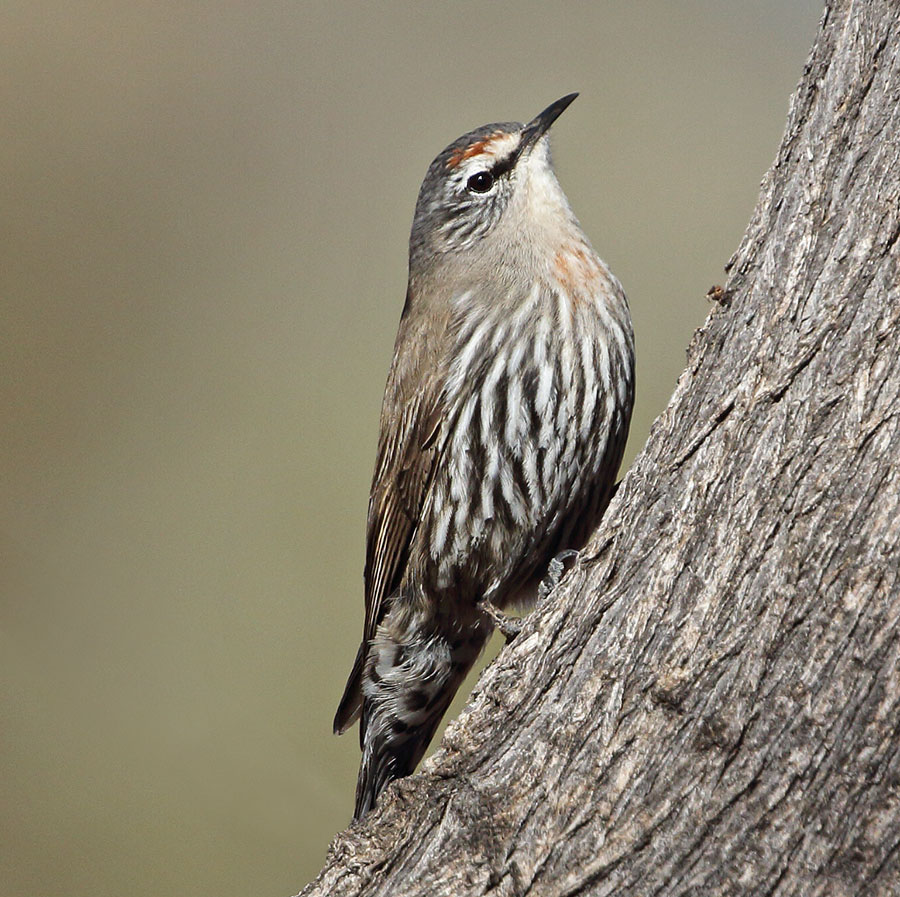
Treecreeper,_White-browed Climacteris affinis Found: Australia
The White-browed Treecreeper has long white supercilium; black and white streaks on face, uunderparts.
Image by: 1) Brian_McCauley 2) Tom Tarrant - Queensland 3) Peter_Jacobs .jpg)


Genus Cormobates
Treecreeper,_Papuan Cormobates placens Found: New Guinea
The Papuan Treecreeper has been considered a subspecies of the White-throated Treecreeper.
Image by: 1) John_Gould

Treecreeper,_White-throated Cormobates leucophaea Found: Australia
The White-throated Treecreeper has brown upperparts; white throat, upper-breast; brown flanks with white spots. Female has pale orange-brown patch on cheek.
Image by:1, 2, 3) David Cook 1) Female 2, 3) Male


